


In this guide
- 01Why do your best calls come at your worst time?
- 02Test your own phone first (it takes 20 minutes)
- 03How quickly should you respond to a lead?
- 04Missed call text back: the cheapest fix you can make
- 05What to ask on the first call (copy this script)
- 06How to get more calls from your Google Business Profile
- 07California rules that quietly cost you calls
- 08Mistakes that make the phone go quiet
- 09What to do this week
- 10In short
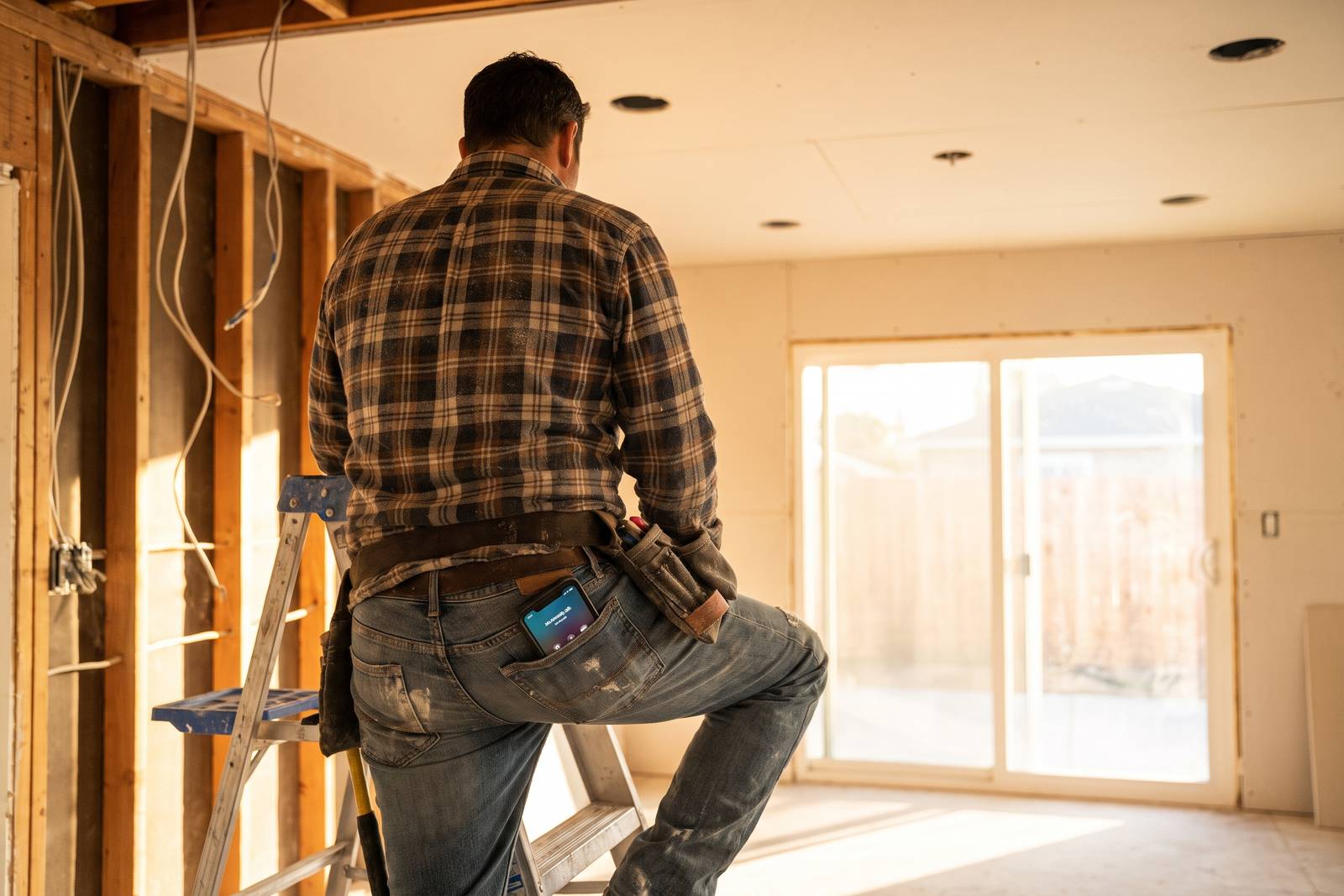
Most contractors who tell us “we need more calls” are already getting them. The phone rings while the owner is on a ladder, the office is at lunch or the estimator is driving between site visits. The homeowner doesn't leave a message. They call the next company on the list.
So before you spend more on ads, check where calls get lost. This guide walks you through it step by step, cheapest fix first, with a phone script you can copy. It's written for remodeling, roofing and home-service companies in Orange County and the rest of Southern California.
Why do your best calls come at your worst time?
A homeowner with a leaking roof or a kitchen they're tired of looks for help on their phone in a spare moment: lunch, the evening, Saturday morning. They rarely call just one company. They try two or three and usually go with whoever picks up or writes back first.
Your day works the other way. The people who could answer the phone have tools in their hands during the same hours homeowners are searching. That's why more ad money often brings more missed calls, not more jobs.
That's why more ad money often brings more missed calls, not more jobs.
Test your own phone first (it takes 20 minutes)
Before you change anything, find out what a homeowner actually experiences. Ask a friend or family member to contact your company like a real customer, at three different times, and write down what happens.
- Call your main number on a weekday morning, a weekday evening and a Saturday morning. Did a person answer? After how many rings? What did they ask?
- Fill out the form on your website. How long until a real person replied, and what did the reply say?
- Call the number on your truck and the one on your Google profile. Do they ring in the same place?
- Do the same with two competitors you respect, but stop before anyone books a visit. Who asked about the project, the city and the timing? Who just said “send us an email”?
Most owners are surprised by the result. That's the point: you can't fix what you've never seen from the homeowner's side.
How quickly should you respond to a lead?
A lead is simply a person who reached out about a project: a call, a form, a text or a message. The honest answer is as fast as you realistically can, and the same day at the latest. We can't give you a proven number for remodeling in Orange County, and we'd be careful with anyone who does.
What we do know is how homeowners shop. If they contacted three companies, the first one to have a real conversation with them has the edge. A reply the next morning often arrives after they've already booked someone else.
A simple rule that works for most small teams: one named person owns the phone during the busiest hours, and every form or message gets a short reply from a real person that says who will call and when.
Missed call text back: the cheapest fix you can make
You will miss calls. Everyone does. What matters is what happens next. A missed call text back is an automatic text that goes out right after a call you didn't answer. Many phone systems and CRMs (the software that keeps your customer list, calls and messages in one place) can send it.
Here's a text you can copy: “Hi, this is [Company]. Sorry we missed your call, we're on a job site. What project are you planning, and in which city? We'll call you back by [time].”
Made-up example with round numbers: you get 60 calls a month and 20 go to voicemail. Almost none of those 20 call back. If the text and a callback within the hour turn just 3 of them into site visits, that's 3 more estimates without spending a dollar more on ads.
What to ask on the first call (copy this script)
Asking a few questions isn't about turning people away. It's about knowing, before you drive 40 minutes, whether the project is real. Keep it friendly and write the answers down as you talk.
- “Thanks for calling [Company], this is [Name]. Are you calling about a project at your home?”
- “What are you looking to do?” A kitchen, a bath, an ADU or a roof each needs a different kind of visit.
- “Which city is the home in?” Check it's inside your area before anything else.
- “When would you like to start?”
- “Projects like this usually start around [your minimum]. Is that in the range you had in mind?” Only use a number you can honestly stand behind.
- “Will anyone else be part of the decision? It helps if they can be at the visit.”
- “I can come by Thursday at 4 or Friday at 10. Which works better?” Then confirm the date, time and address by text the same hour.
If it isn't a fit, say so kindly: “From what you describe, we're probably not the right company for this one, and I'd rather tell you now than waste your time.”
How to get more calls from your Google Business Profile
Your Google Business Profile (the listing that shows up on Google Maps, formerly called Google My Business) is often the first thing a homeowner sees. If it looks abandoned, they move on before they ever call.
- Ask every happy client for a review when the job is done, not months later.
- Add photos of real finished jobs regularly. Stock photos don't build trust.
- Use the same phone number everywhere, and make sure someone answers it.
- List only the services you really want, so the calls you get match the work you do.
California rules that quietly cost you calls
Orange County homeowners can check a contractor in minutes, and the Contractors State License Board (CSLB) encourages them to do it with its “Check the License First” campaign. Your ads and website are read with that in mind.
CSLB's advertising bulletin reminds licensed contractors to include their license number on ads, including websites and online postings, to advertise only work within their license classification, and not to advertise that they are bonded. It says penalties for advertising violations can range from $100 to $5,000. A missing license number doesn't only risk a fine. It makes a careful homeowner wonder whether you are who you say you are.
One more detail: since January 1, 2025, a California law (AB 2622) lets an unlicensed person take jobs under $1,000 if no workers are hired and no permit is needed, and advertise them as long as the ad says they are not licensed. Paying for ads to win tiny jobs puts you up against people with none of your costs. Set a minimum job size, say it on the phone and aim your ads at the work that pays.
Mistakes that make the phone go quiet
Every one of these is easy to understand, which is why they stick around. None needs a bigger budget to fix.
- Raising the ad budget first. You pay for more calls that end up in the same place: voicemail.
- Judging a lead source only by its price per lead. The cheapest lead is often the one nobody can reach.
- One voicemail after hours while a competitor's text arrives in seconds.
- One general page for kitchens, baths, ADUs and roofs. A roof leak and a whole-home remodel are very different decisions.
- No follow-up after the estimate, because silence feels like a no.
- Changing five things in one month, so you never know what worked.
What to do this week
None of this needs a new tool or a new agency. One small step a day is enough.
- Day 1: run the phone test at three different times and write down what happened.
- Day 2: list every place your phone number appears: website, truck, Google profile, ads, cards.
- Day 3: set up the missed-call text and teach the script to whoever answers the phone.
- Day 4: take your last 20 inquiries and mark each one: answered, visit booked, estimate sent, job signed.
- Day 5: find the step where most of them got stuck and fix only that one.
After that, keep a simple weekly count for at least six weeks: calls received, calls answered, visits booked and jobs signed. One good or bad week proves nothing. The trend does.
In short
Before you pay for more calls, make sure you're catching the ones you already get: answer fast, text back every missed call, ask a few questions and follow up after every estimate. For that last part, our guide on how to write an estimate that wins the job picks up where this one ends.
If the phone is still quiet after all that, the problem really is visibility, and that's when more advertising makes sense. Local Services Ads vs. Google Ads helps you choose where to start.
If you want a second set of eyes on the whole path from first call to signed job, Book a Strategic Growth Session. We'll look at your numbers with you and tell you honestly whether the problem is the ads or something else.